
Wilsonville Previous Resident Sources
The tools shift as a Wilsonville address moves back through time. Start with WilsonvilleMaps to pin down the parcel. The map shows whether Clackamas or Washington County holds its recording and tax records. Carry the tax lot, legal description, lot, block, and subdivision forward through deeds, probate, permits, census images, obituaries, and historical collections. Keep the survey reference and county in hand too. A city mailing address and the 97070 ZIP do not pick the right county office. Checking both counties prevents a convincing but wrong address trail in any resident lookup.
| Source | Years it covers | Where held | What it shows |
|---|---|---|---|
| Wilsonville building documents | Residential plans scanned and retained from 2015 | WilsonvilleMaps or City records request | Permit history, inspections, certificates of occupancy, available plans, and site materials. |
| County parcel and map tools | Current systems; historic value history separate | Clackamas AscendWeb/CMap or Washington InterMap | Parcel identity, tax and building context, jurisdiction, and mapping clues. |
| County recording office | Online start year not verified | Correct Clackamas or Washington County recorder | Recorded deed chain, legal description, recording reference, and prior party link. |
| Territorial Clackamas quitclaims | 1850–1859 | Oregon State Archives | Grantor-indexed early land conveyances, property description, consideration, and recorded date. |
| Clackamas probate records | Case files 1844–1928; index 1845–1979; related series through 1959 | Oregon State Archives | Estate, representative, heir, and historical property context. |
| Library and family-history collections | Exact local directory years not published | Wilsonville Library and CCFHS | Maps, obituaries, cemetery indexes, photos, family files, and possible directories. |
Treat the era table as a switching rule. Send a recent physical change to city building documents first. Send an ownership question to the proper recorder's deed chain. Send a family or estate question to the Library. Or send it to OHRI or the State Archives. Note: A permit applicant, deed party, or tax contact is not automatically a person who lived at the address.
Wilsonville Address Records Parcel Start
Start at WilsonvilleMaps. Search a primary parcel address or tax lot. Pick the result, and note the county boundary, map number, and legal land description. City search tips warn that a street number alone can return a broad address suggestion list. Exact tax-lot work follows the displayed format, such as 3S1W13CC002. The City directs users to insert underscores when quarter-quarter letters are missing. More than 250 results means the query needs narrowing. Remember the map gives parcel context, not a title history or household roster.
Then follow the county-specific route. Clackamas AscendWeb takes an eight-digit account number or a required street address. Optional city, state, and ZIP fields are also available. Clackamas CMap searches address, city, intersection, tax lot, or parcel number. It publishes no owner names online. Washington County relies on InterMap by address, Tax Lot ID, or R number. The next step is the Assessment & Taxation information report. For current owner details, use the proper official contact or counter channel. Keep the tax mailing address separate from the situs, which is the physical parcel address.
Wilsonville Address Records Deed Chain
A title trail starts with the present acquisition deed from the correct county recording office. Copy the grantor, grantee, recording date, and any prior-record reference. Also note the instrument number or book and page if given. Include the legal description and the consideration if shown. Then search that seller as a grantee to find the earlier purchase. Repeat the process backward, always pairing the name with the legal description and county. A changed street label means little here. A matching house number means no more. Neither one replaces the legal land description in a property records search.
- Confirm the address, tax lot, county, and legal description through the City map and county property route.
- Ask the correct recording office for the present acquisition instrument, counter search, or copy process.
- Transcribe the document reference and use the prior owner as grantee in the next older transaction.
- Repeat the chain backward, checking the legal description, plat, lot, block, and date at every transfer.
- When the online path becomes uncertain, call, visit, or request an older instrument instead of inventing an online cutoff year.
- Grantor and grantee
- The grantor transfers an interest. The grantee receives it. In a backward deed search, the seller can reveal an earlier purchase as grantee.
- Chain of title
- The ordered sequence of recorded transfers used to trace an interest in the same described land.
- Legal description
- The lot, block, plat, tax-lot, or survey language identifying land. It is more durable than a modern street address.
The Clackamas County Recording page gives office access details. Confirm historic index or image availability directly with the recorder.
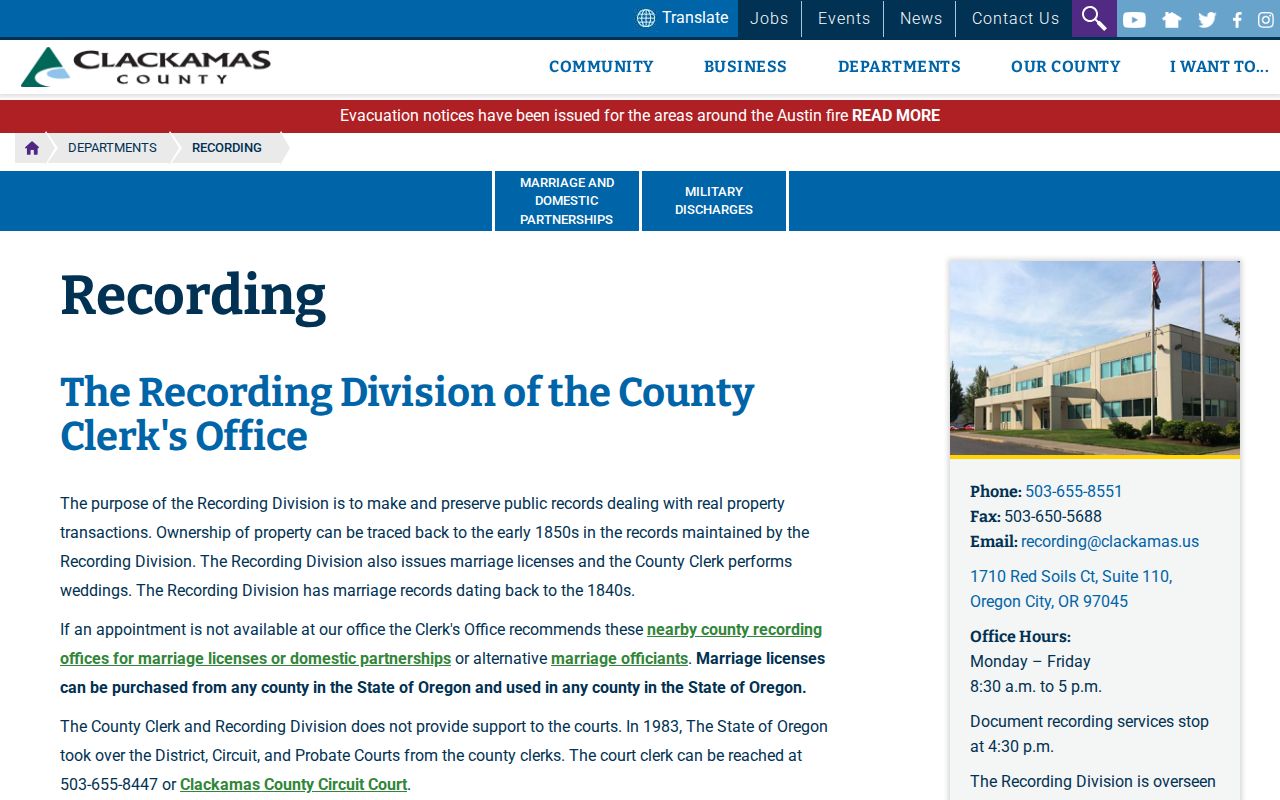
The recording office turns a parcel clue into an official deed or copy request. A tax map alone is never the complete title history.
Wilsonville Address Records Building Trail
Building files can date a property change without proving a household. After choosing a parcel in WilsonvilleMaps, scroll the information pop-up to Building Documents. Then select Public Building Documents. The material may include permit history, inspections, certificates of occupancy, construction plans, and water or sewer site-plan records. It can show an addition, remodel, inspection, or project moving through a municipal file. It may name a contractor, design professional, applicant, or owner as a document participant. That does not mean the person resided there.
Residential construction plans began being scanned and digitally retained in 2015. Older houses can still hold a permit history even without drawings. If an older file is missing, submit a City public-records request with the property address, tax lot, project name, department, record type, and date range. A useful shortcut: inspect public building documents before asking the City to search a broader file.
Wilsonville Address Records Probate Trail
Death often explains a missing deed signature. A prior owner may have dropped out of the chain. In that case, turn to Oregon State Archives material and the Oregon Historical Records Index. Start surname-only unless the name is common. Then narrow with a given name or county, keep the original spelling, and skip periods. Clackamas County has documented historical series. These include deaths, marriages, divorces, estates, guardianships, naturalizations, and probates. Copy the displayed spelling, record type, county, dates, and citation before requesting an original.
The Archives holds a deep Clackamas probate run. Case files span 1844 to 1928. The case-file index runs 1845 to 1979, estate material reaches 1959, and journals stretch from 1844 to 1959. Territorial probate packets vary. Bonds, petitions, inventories, appraisals, correspondence, accounts, and guardianship papers can all appear. Probate may name a personal representative or an heir. Link that person to a deed and its legal description before drawing any property conclusion.
The Wilsonville Library genealogy collection helps with family context. It pairs census, obituary, cemetery, newspaper, and history resources with an archive citation.
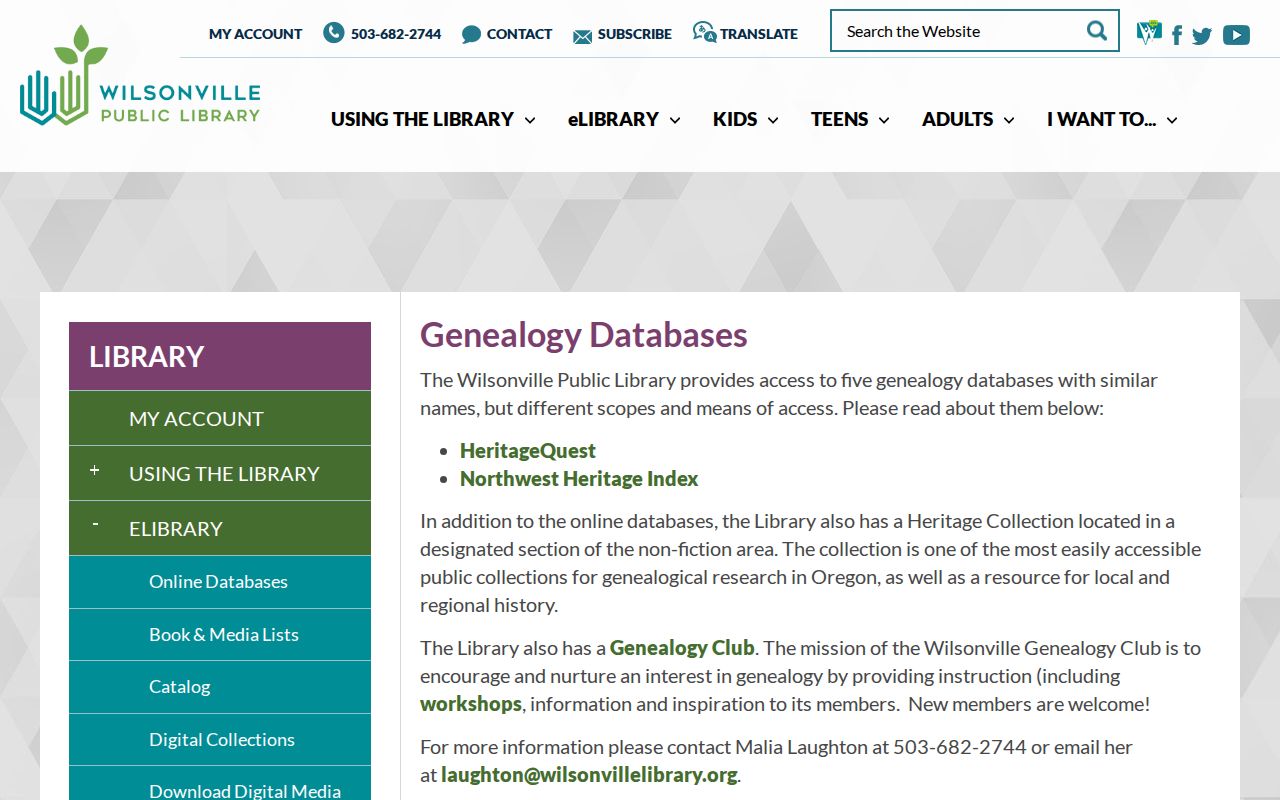
The Heritage Collection is a local follow-up route. It pairs a probate or name-index lead with census, obituary, cemetery, and historical newspaper material.
Wilsonville Address Records Household Clues
Deeds track transactions. Household context usually comes from historical collections instead. The Wilsonville Library reports federal Oregon census microfilm for 1850–1930, territorial and state census material, and Oregon vital, cemetery, and mortuary sources. City directories, newspaper indexes, school yearbooks, local newspapers, photographs, scrapbooks, diaries, and letters round out the holdings. The published inventory lists no exact Wilsonville city-directory run. Nor is a reverse or criss-cross directory confirmed. Ask a librarian before treating a regional volume as an address source.
The Northwest Heritage Index supplies a strong end-of-trail lead. Black entries point to roughly 17,000 obituaries, chiefly for Clackamas County residents or former residents, drawn from more than a century of Canby newspapers. Green entries point to books and Heritage vertical files. The abbreviation res., a parenthetical prior surname, and the + spouse notation can test a relationship or a historic name. Each is only a pointer, not a finished account of who lived at an address.
- Match a confirmed directory or historic name with the nearest released census image and historical community label.
- Compare the address or land description with the deed chain rather than assuming a current street number has always applied.
- Use obituary, cemetery, and newspaper leads to test dates, kinship, or a move.
- Check probate or estate material when a deceased owner’s transfer needs an official family or representative record.
Need more than a name and a street? The Clackamas County Family History Society holds deeper resources for Wilsonville research, including maps, microfilm, obituary clippings, unindexed vital and burial records, and surname files. Call 503-655-5574 before you visit.
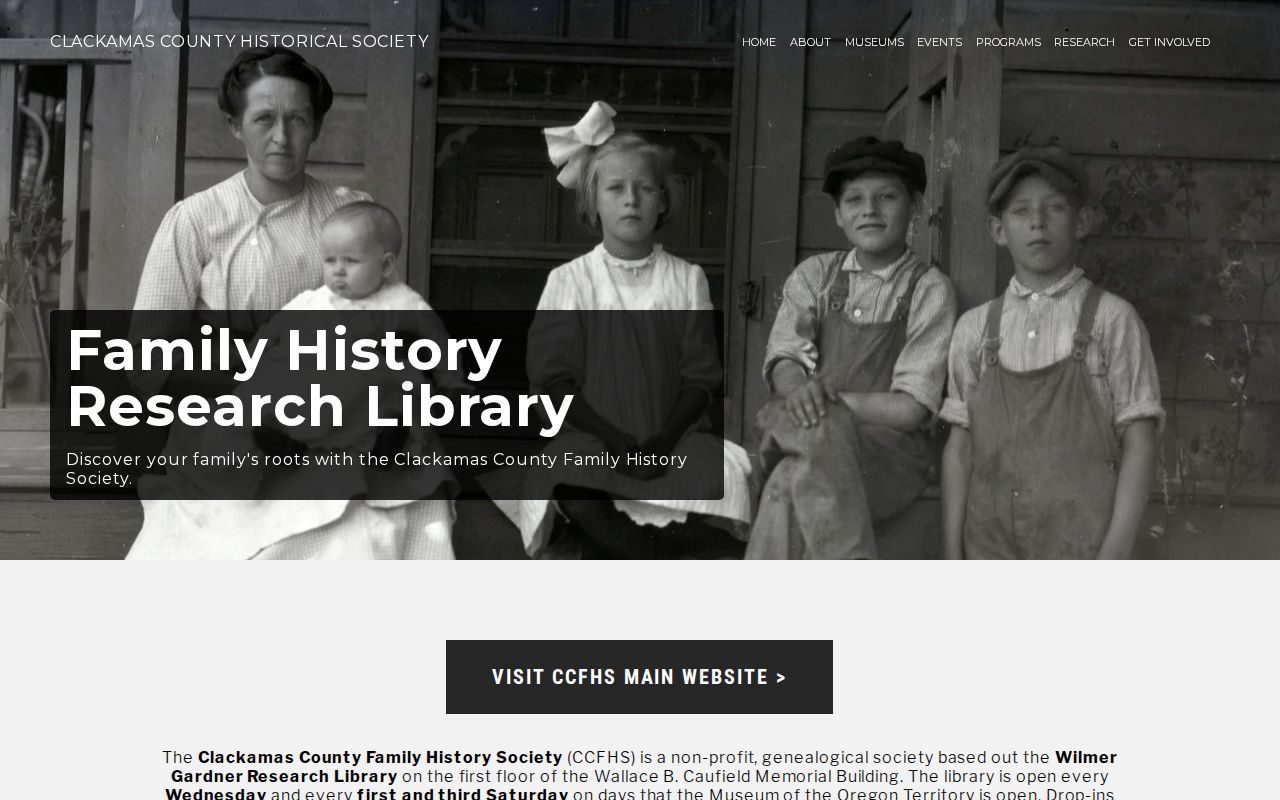
The society's Oregon City research library serves as a county-level backup. It helps when a Wilsonville previous-residents trail needs microfilm, maps, clippings, or a surname file.
Wilsonville Address Records Place Names
Old place names can derail a careful search. Boones Ferry Landing was established in 1846, ferry service began in 1847, a Boones Ferry post office appeared in 1876, and the community took the name Wilsonville in 1880. The rail and depot period followed in 1906–08. The commercial center later shifted from Old Town toward Town Center. So search Boones Ferry, Boones Landing, Old Town, and Wilsonville across library, photograph, newspaper, and archive queries. Add surname variants too.
The Clackamas County Historical Society's digitized photo collection defaults to OR searches. Exact phrases go in quotation marks. + requires both terms, and * works as a wildcard. Metadata can help date a place or an organization. No photograph proves an occupant by itself.
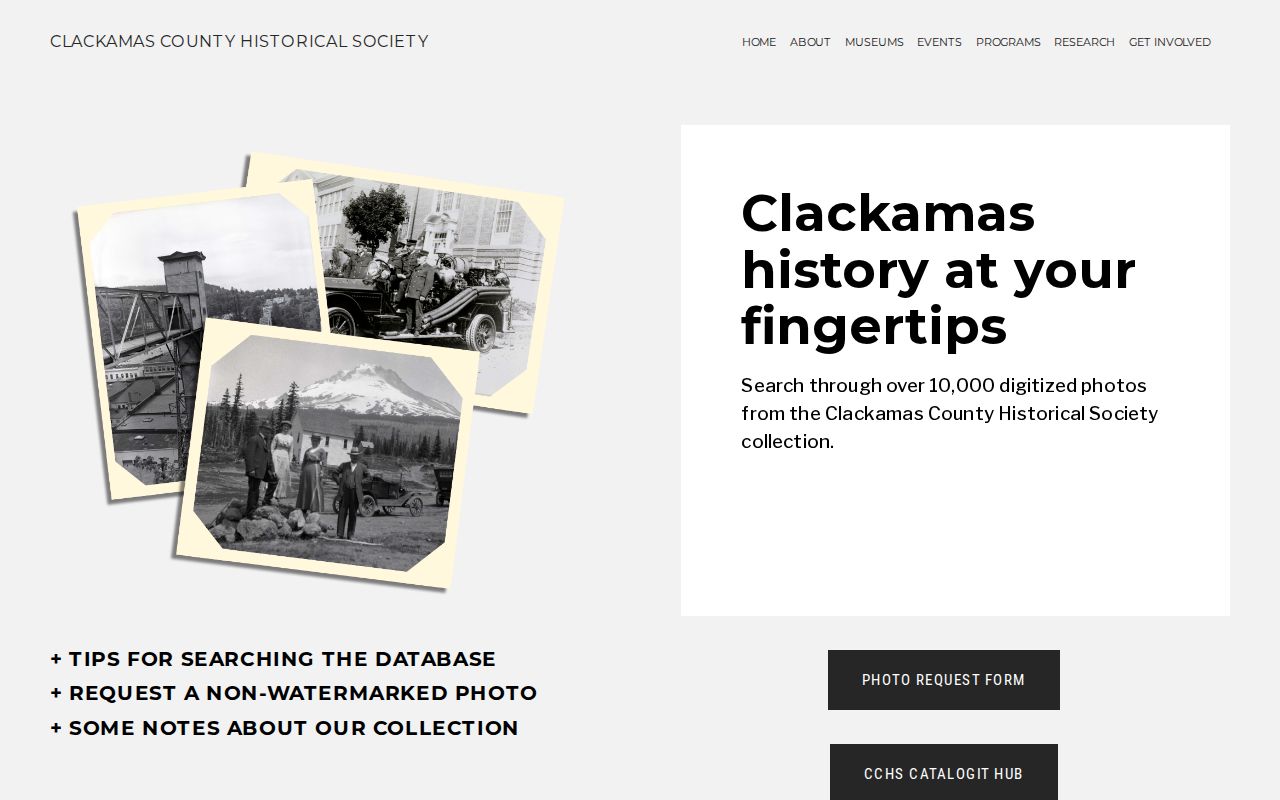
Photographs offer contextual evidence for older place terms. A deed, newspaper, obituary, or possible directory volume may carry a name that a photo helps anchor in time.
Wilsonville Address Records Local History
The Wilsonville Historical Society is based at the Public Library. It meets the first Wednesday of each month. Hours are 1 to 3 p.m. in the Rose Room. The volunteer local-history route suits certain questions. Ask about Boones Ferry, historic photographs, cemeteries, family names, or whether a collection covers a particular period. The Emery and Alice Aden Digital Image Collection holds selected Society photographs. High-resolution prints and restoration are available by appointment. The City's rights and reuse rules apply.
The Historical Society supplies local context, not a roster. No public list of former household members exists there, so treat it as one thread in a documented address trail.
Wilsonville Address Records Limits
Assumption cannot fill the gaps in Wilsonville previous-residents research. The City publishes no house-history guide, and no local street-renumbering year, confirmed Sanborn-map year, recorder online-index cutoff, or Wilsonville reverse-directory run is on record. Use the library or archive inquiry path for those. A record can identify a transaction party, a building-file participant, a relative, a historic residence area, or an event. None of that guarantees continuous occupancy. An address trail still needs corroboration at every step.
Lawful use. Use Wilsonville previous-residents records for house history, family history, estate research, and personal curiosity. Oregon law prohibits using address or record information to stalk, harass, threaten, or harm a living person.
Need a current person rather than an address trail? Use the official one-person record channels and keep the same two-fact verification standard.